A trunk main can lose a valve and keep delivering. A reservoir can run low for a day. When the duty pump at a booster station trips and the standby does not pick up, the zone downstream loses pressure within hours. That is why pumps sit near the top of almost every utility criticality register, and why they are usually the first assets a water operator asks us to monitor.
Why a monthly route misses it
The traditional approach is a route: a technician visits each station on a fixed cycle, takes readings with a handheld meter, and logs an overall level. It is better than nothing, and it catches faults that develop slowly. The trouble is the faults that do not. A bearing can go from its first detectable defect to a failure that takes the pump out in a matter of weeks, and a monthly route sees it at most once or twice on the way, if the reading happens to be taken while the pump is running at the duty point where the fault shows.
Standby pumps make it worse. A pump that runs a few hours a week may never be running when the technician arrives. Continuous monitoring records every start, so the standby pump is measured on the days it actually runs.
What typically goes wrong, and where it shows
Four faults account for most of what we see on centrifugal pumps and their motors. Each leaves a different signature in the spectrum, which is why a single overall number is not enough. The detail of the bands is in Reading vibration: what bands B1 to B7 actually tell you about a rotating asset; the short version for pumps is this.
- Imbalance. Energy at once per revolution (1×), in the radial direction. On a pump it often follows impeller wear, erosion or a build-up of deposits.
- Misalignment. A strong component at twice running speed (2×), often with high axial vibration. Common after a motor has been removed and refitted, or where the baseplate has settled.
- Bearing wear. The earliest signs are at high frequency: lubrication distress and envelope energy, well before the bearing defect frequencies themselves rise. By the time a handheld overall level moves, the bearing is usually well into its decline.
- Cavitation. Broadband, random energy at high frequency rather than clean peaks, often with unsteady vane-pass. It points to a pump running away from its best efficiency point or short of suction head, which is an operating problem as much as a mechanical one.
Looseness and soft foundations show up too, as low-frequency energy below running speed. A rising low band on a pump is more often the plinth or the coupling than the pump itself.
Where to mount the sensor
As close to the bearings as the casing allows, on a stiff, flat surface, and bolted or stud-mounted rather than stuck on. High-frequency energy from a bearing fades quickly across joints and thin covers, so a sensor on a guard or a motor fan cowl will miss the earliest warning. On a typical horizontal pump set the priority points are the pump bearing housings and the motor drive-end bearing. On a vertical pump, the motor bearings at the top of the stack are usually the only practical position, and the analysis has to allow for that.
Why each pump needs its own baseline
Two identical pumps on the same header will not vibrate the same way. Foundations, pipework, duty point and history all differ. A single fixed threshold applied to every pump either misses faults on the quiet ones or alarms constantly on the noisy ones.
Sensored sets alert thresholds per asset and per failure mode, against that sensor’s own baseline. The baseline has to be recorded across the conditions the pump actually sees: duty and standby, high and low demand, summer and winter. An alert then says which band moved, by how much against that pump’s own normal, and for how long, which is something a maintenance planner can act on.
Gulf conditions
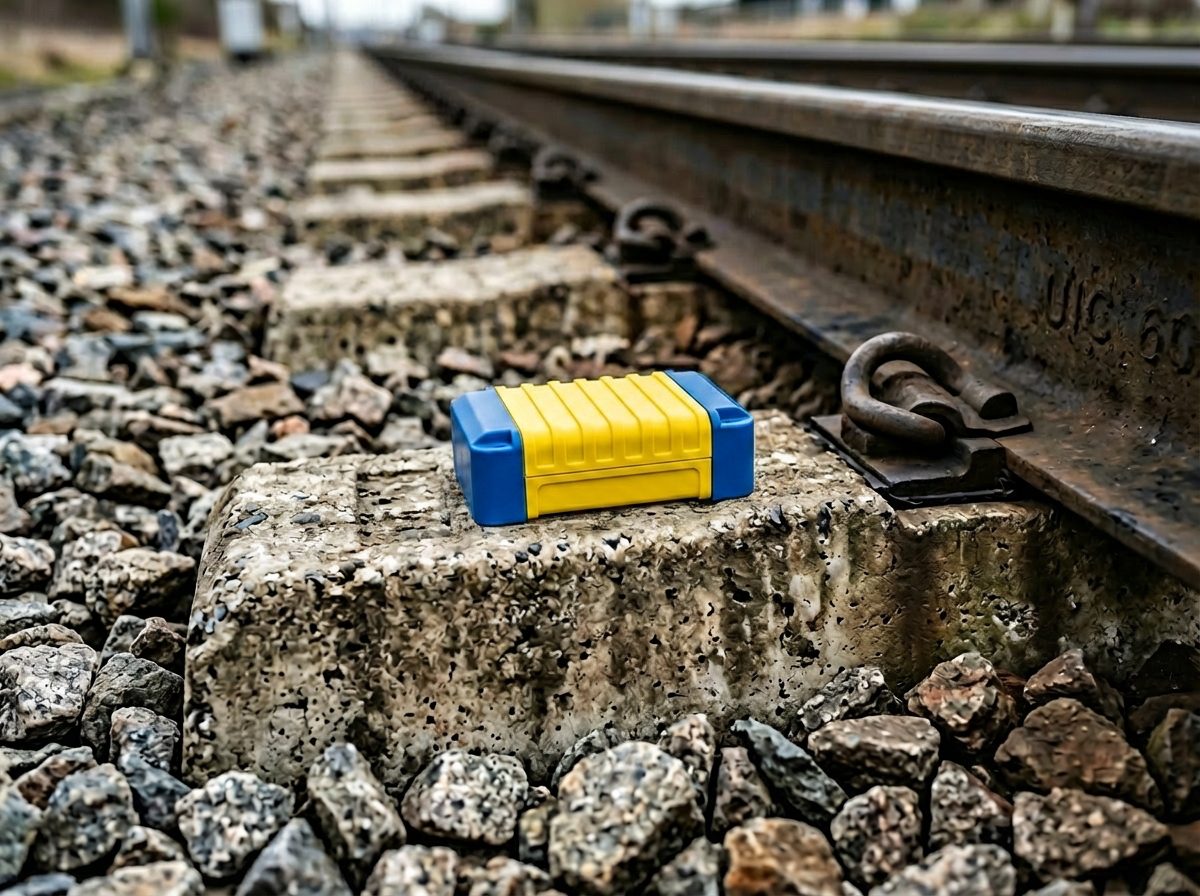
Pump stations in the Gulf are hot, dusty, and often a long way from a good network connection. Sensored enclosures are IP65 rated and run from minus 20 to plus 70 degrees Celsius, which covers an unventilated pump hall in August. Data goes out over WiFi or cellular, with a LoRa option for remote sites, and everything is also written to a local SD card, so a dropped link costs latency rather than data. Units run on wired DC where the station has it, or on battery where it does not.
Where the alert should go
An alert that stays in a monitoring dashboard changes nothing unless someone remembers to open it. The alert should land in the maintenance system the planner already uses every morning, as a notification or a work order against the right pump, with the evidence attached. Sensored has a REST API for CMMS and ERP platforms, and we build that integration as part of the installation.
That point, and five others, are in Six questions to ask before buying condition monitoring. For a pumping station they come down to the same thing: measure each pump against itself, continuously, and put the result where the maintenance work is planned.
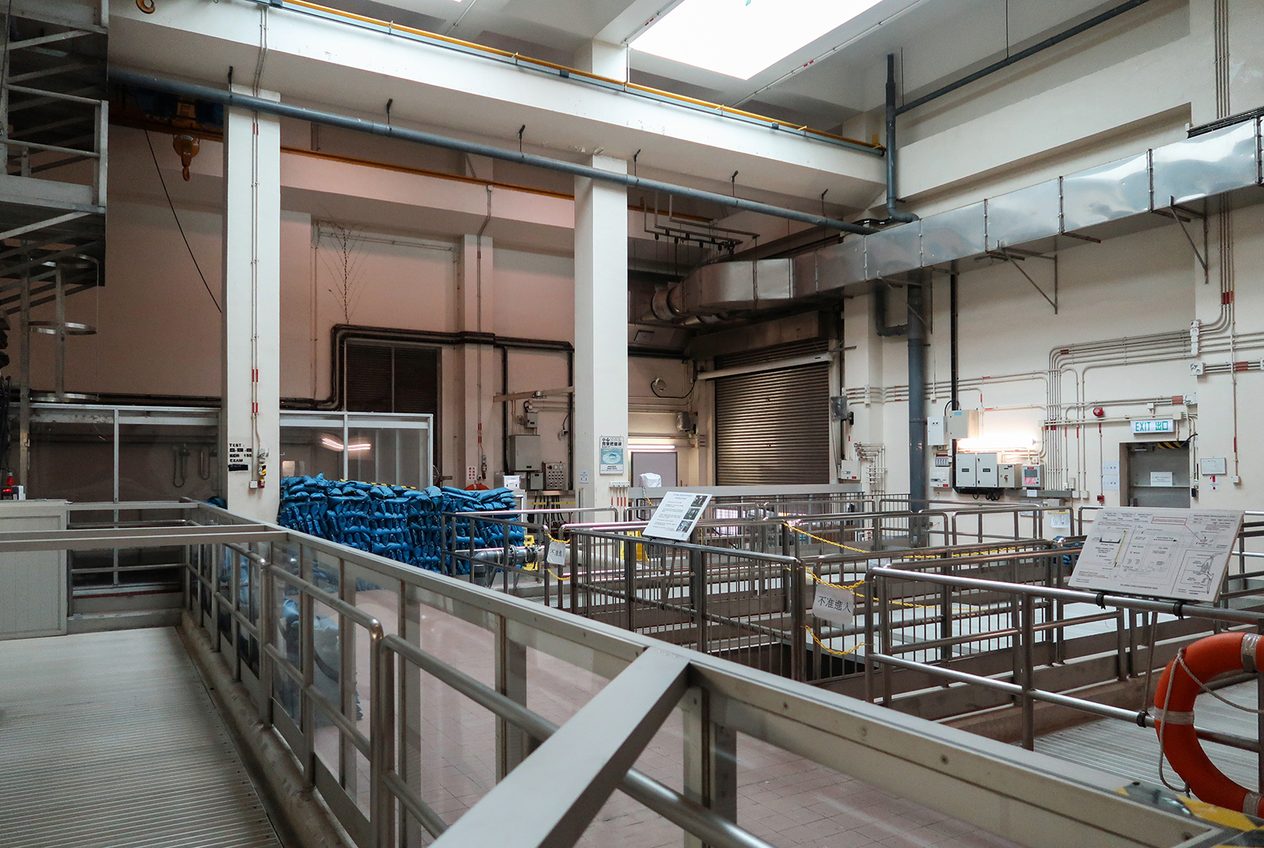
Image: Tai Hang Tung Flood Storage Flood water pumping station interior 2018 by Wpcpey, CC BY-SA 4.0, via Wikimedia Commons.