Client context
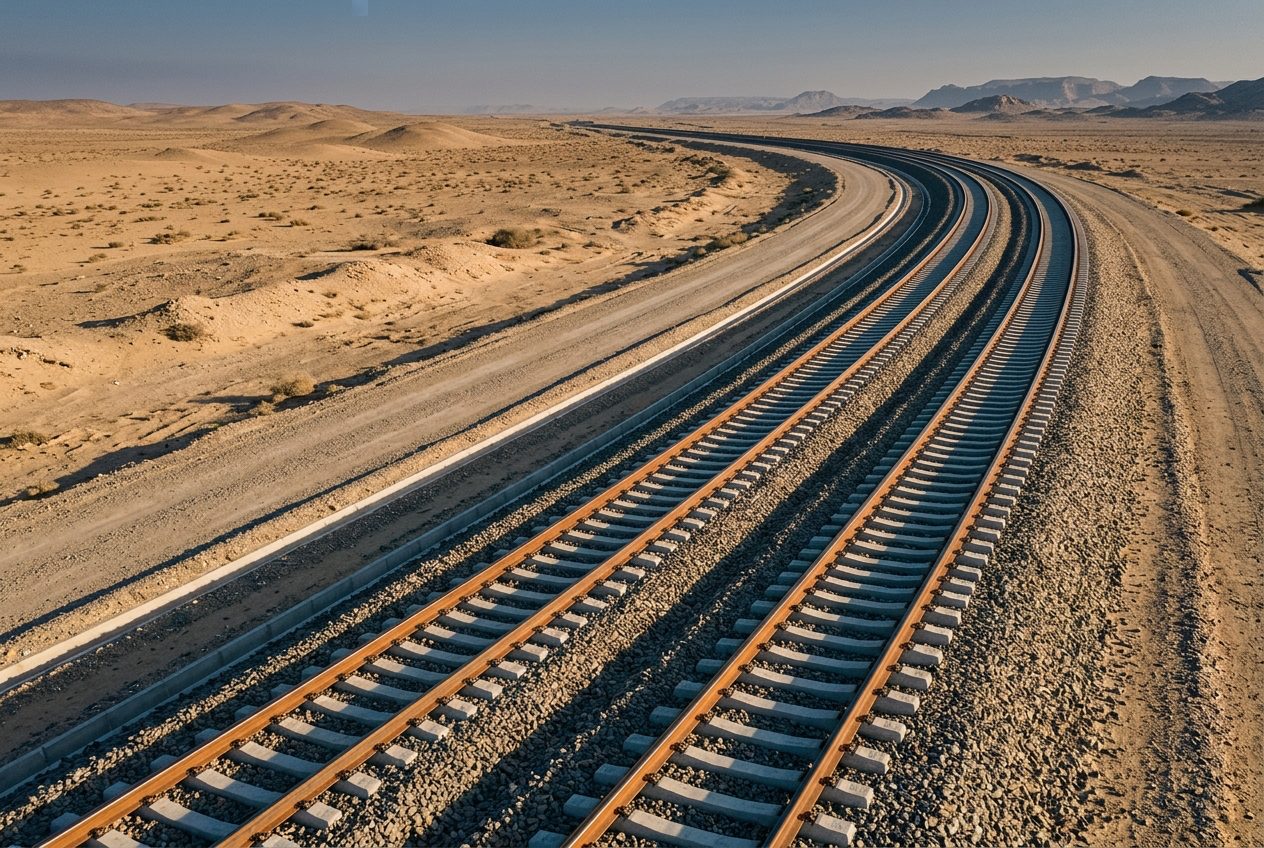
A mainline railway operator in the GCC, running mixed freight and passenger traffic over several hundred route-kilometres of mostly desert corridor. The network is young by international standards. Track and rolling stock are modern; the asset management framework around them is still being built out as the operational footprint grows.
Challenge
Manual track inspections ran to the standard Gulf schedule, but between scheduled runs the operator had no visibility of emerging defects. Three specific failure modes drove the project:
- Sleeper voiding beneath fastenings in sections where ballast had migrated after high-temperature cycling, producing dynamic loading the inspections did not catch until deflection became visually obvious.
- Joint and weld deterioration on a handful of sections with heavier freight loading, where impact signatures were present long before gauge or geometry measurements crossed intervention thresholds.
- A backlog of low-confidence defect records from track-walker inspections, some of which were false positives that were nevertheless consuming maintenance crew time.
The operator's core requirement was straightforward to state and difficult to deliver: narrow the window between defect onset and detection, without adding to the inspection workforce and without changing the core CMMS.
Approach
PRAXIS scoped a staged deployment aligned with the operator's ISO 55001 roadmap. The engagement started with an asset-criticality review of a priority corridor segment, a failure modes analysis keyed to the dominant Gulf-specific degradation mechanisms, and a monitoring architecture design that would integrate with the operator's existing maintenance workflow rather than replace it.
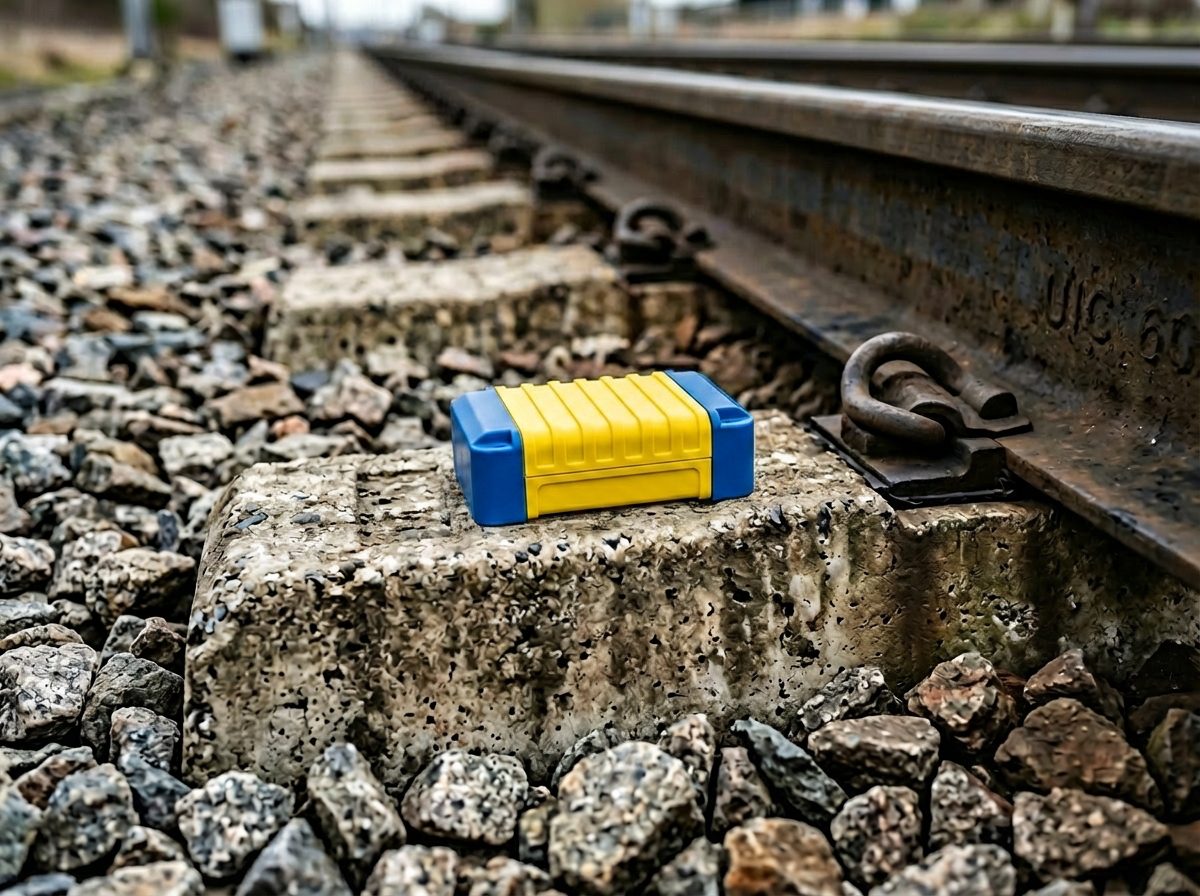
The monitoring layer was delivered using the Sensored platform. Accelerometer nodes (ICM-42688 IMU plus IIS3DWB high-bandwidth accelerometer, on Portenta H7 hardware) were deployed along the priority segment, capturing vibration data continuously and sampling the high-bandwidth channel at 26.7 kHz for defect-frequency resolution. On-edge DSP extracted energy in the B1–B7 frequency bands defined for rail, and transmitted band-level features and transient events to UAE-hosted infrastructure over cellular and, where available, operator WiFi. Baseline behaviour was captured across a multi-week commissioning window covering the representative operating envelope, summer temperature extreme included, before any alerts were activated.
Alert logic used CUSUM on band energies against each sensor's own baseline, with a guard against slow baseline drift, and crest-factor rules for transient impact events. Alerts surfaced in the Sensored dashboard and were routed, as flagged work items, into the operator's CMMS via REST integration.
Deployment detail
The deployment was intentionally staged. First, a pilot on a defined stretch with a known mix of healthy and suspect sleepers, chosen so that the analytics could be validated against a subsequent manual inspection. Second, extension to the priority corridor. Third, operator training on dashboard interpretation and alert triage, because the platform is only as useful as the engineers acting on it. PRAXIS remained embedded for the first operational quarter to tune thresholds against real field conditions.
Outcomes
Defects on the monitored segment now surface between inspection cycles rather than waiting for the next walk-through. The engineering team also receives fewer low-confidence defect reports, because an alert arrives with the band, the deviation from baseline, and the trend behind it. Numbers on intervention counts and detection lead time sit with the client under the disclosure terms of the engagement, so we do not publish them here.
Lessons
Three lessons generalise from the project.
- Baseline capture is not optional and cannot be shortened.
- Alerts that do not land in the CMMS do not change maintenance behaviour. Integration matters as much as detection.
- On rail assets in the Gulf, the high-frequency envelope bands (B6–B7) consistently preceded any change in conventional geometry or gauge measurement; a monitoring regime that ignores that frequency range is leaving early-warning signal on the table.